- +1 866-935-4226
- admin@elhaamacademy.org
- 87 41 165th St, Queens, NY, United States,11432

AI at Elhaam Acedemy
Teaching students to think with AI, not instead of it.
AI is already part of our students’ live. At Elhaam Academy, every student in grades K-8 learns how it works, what it can and cannot do, and how to use it honestly. Our Goal is simple: AI supports thinking. It does not replace it.
Weekly AI literacy classes
Students in every grade from kindergarten through grade 8 have an AI literacy class each week. Lessons are hands-on and fit each grade. Kindergartens meet a class robot and learn how smart helper differs from a toy. Grade 1 students find the smart tools around school. Grade 3 students explore what AI can do and what it cannot. Grade 4 students study the human thinking skills AI cannot copy.
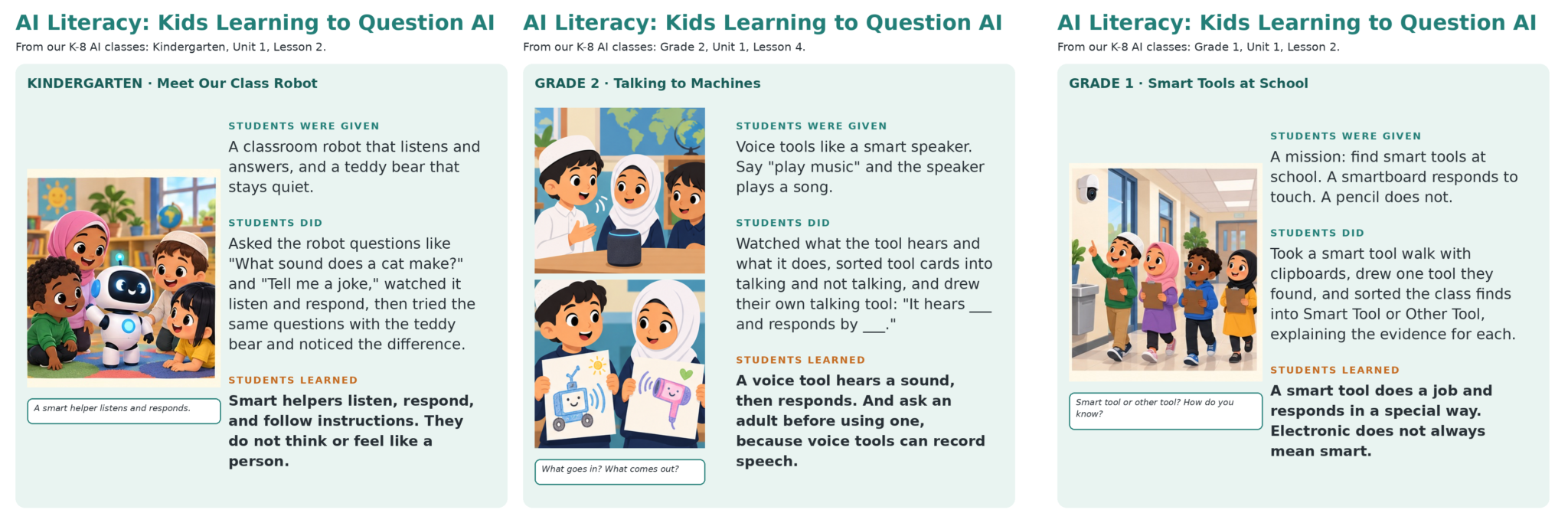
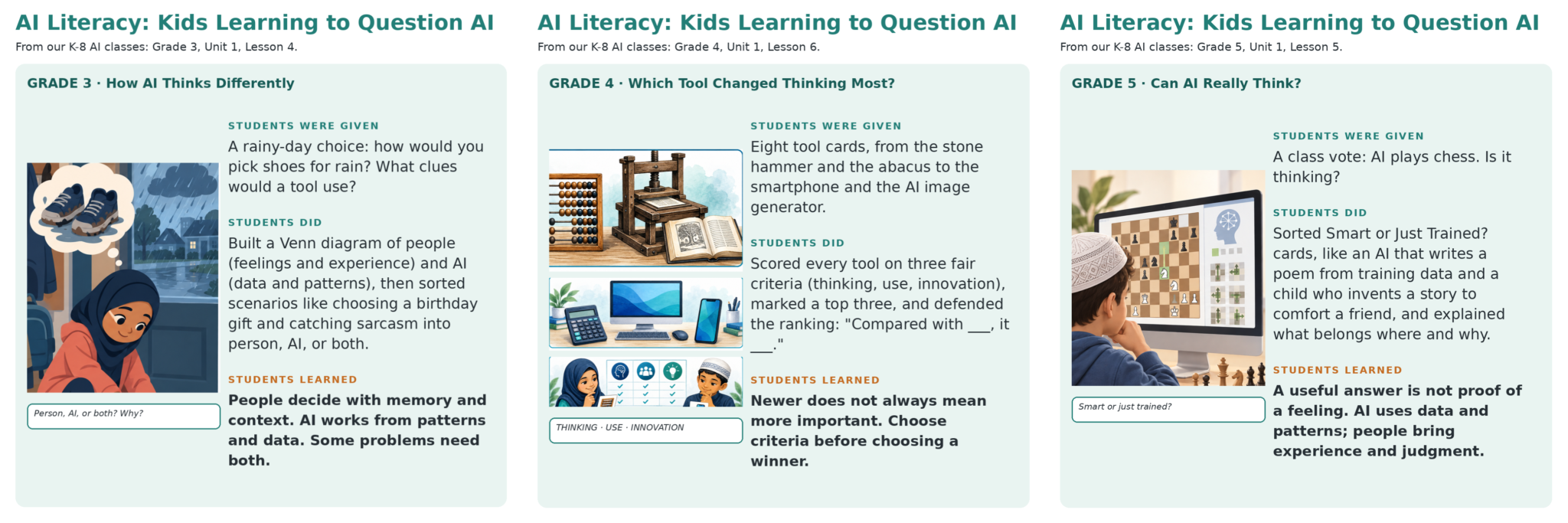
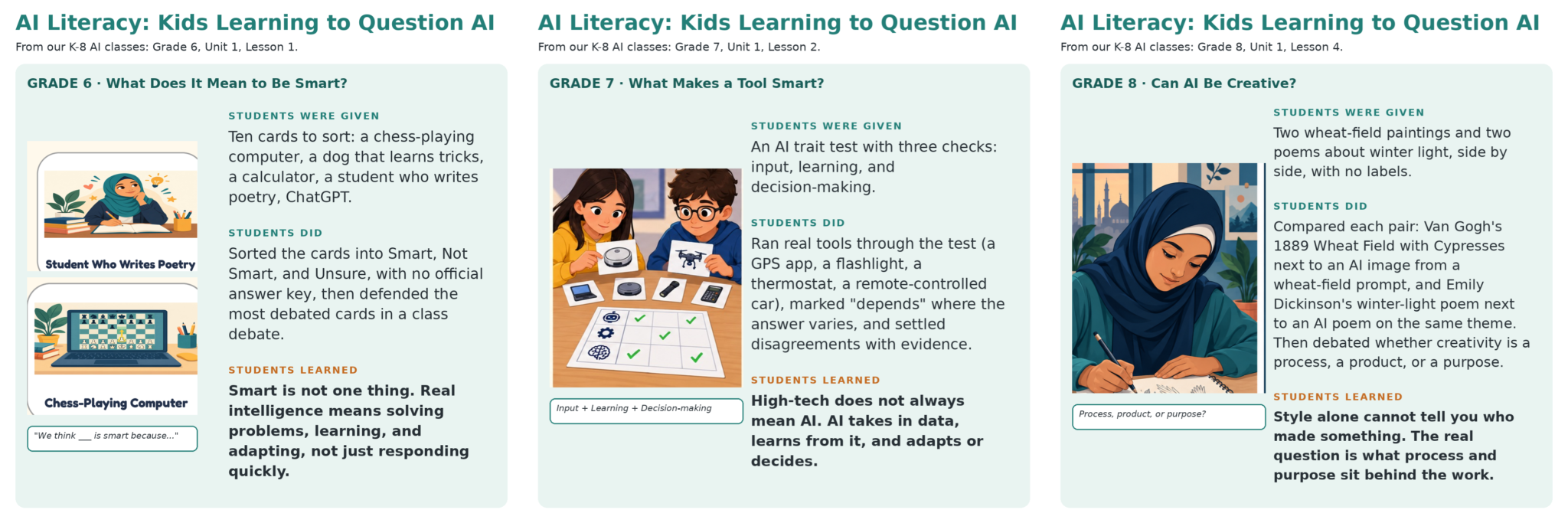
Students have a voice.
Our students told use they want to learn how to use AI properly and to help their learning, and they asked for a class at least once a week. The weekly class is our answer.
Parents and Teachers can learn too
AI safety is a family conversation, so we teach the adults as well.
- Parents AI safety workshops, June 14 and August 8, 2026 Held with Wisteria Mental Health Counseling. The August 8 workshop was co-sponsored by Assemblyman David Weprin.
- Faculty AI workshop, May 26, 2026 Gave our teachers a shared starting point on responsible AI use.
Our AI Use Guidelines
Our interim AI acceptable use guidelines explain when AI can be used, when it cannot, and what it can be used for by grade band.
Elhaam Academy: AI Acceptable Use Guidelines
Interim guidelines for the 2026–2027 school year
AI supports thinking. It does not replace it. These guidelines say when AI can be used, when it cannot, and what it can be used for.
WHEN AI CAN BE USED
• Grades K–2: Students do not use AI tools on their own. Teachers may show AI examples to the class.
• Grades 3–5: Students may use AI only on tasks the teacher assigns, with the teacher present. Think first, then check.
• Grades 6–8: Students may use AI only for tasks the teacher allows, and they tell the teacher when they used it.
• Teachers and staff: May use AI to plan lessons and draft materials. A person reviews everything before it is used or sent.
WHEN AI CANNOT BE USED
• On any task the teacher has said is AI-free, including tests and quizzes.
• To do the work a student was asked to do, without saying so.
• With a student’s name, photo or personal information.
WHAT AI CAN BE USED FOR
• Brainstorming ideas, explaining a hard idea in a new way, and practice questions.
• Checking work after the student has done their own thinking first.
• For teachers: lesson planning, differentiation and routine drafting.
ALWAYS
• Tell the truth about when AI helped.
• Check AI answers against another source. AI can be wrong.
• Ask your teacher if you are not sure.
These guidelines are interim. The school will review them as it learns more.